
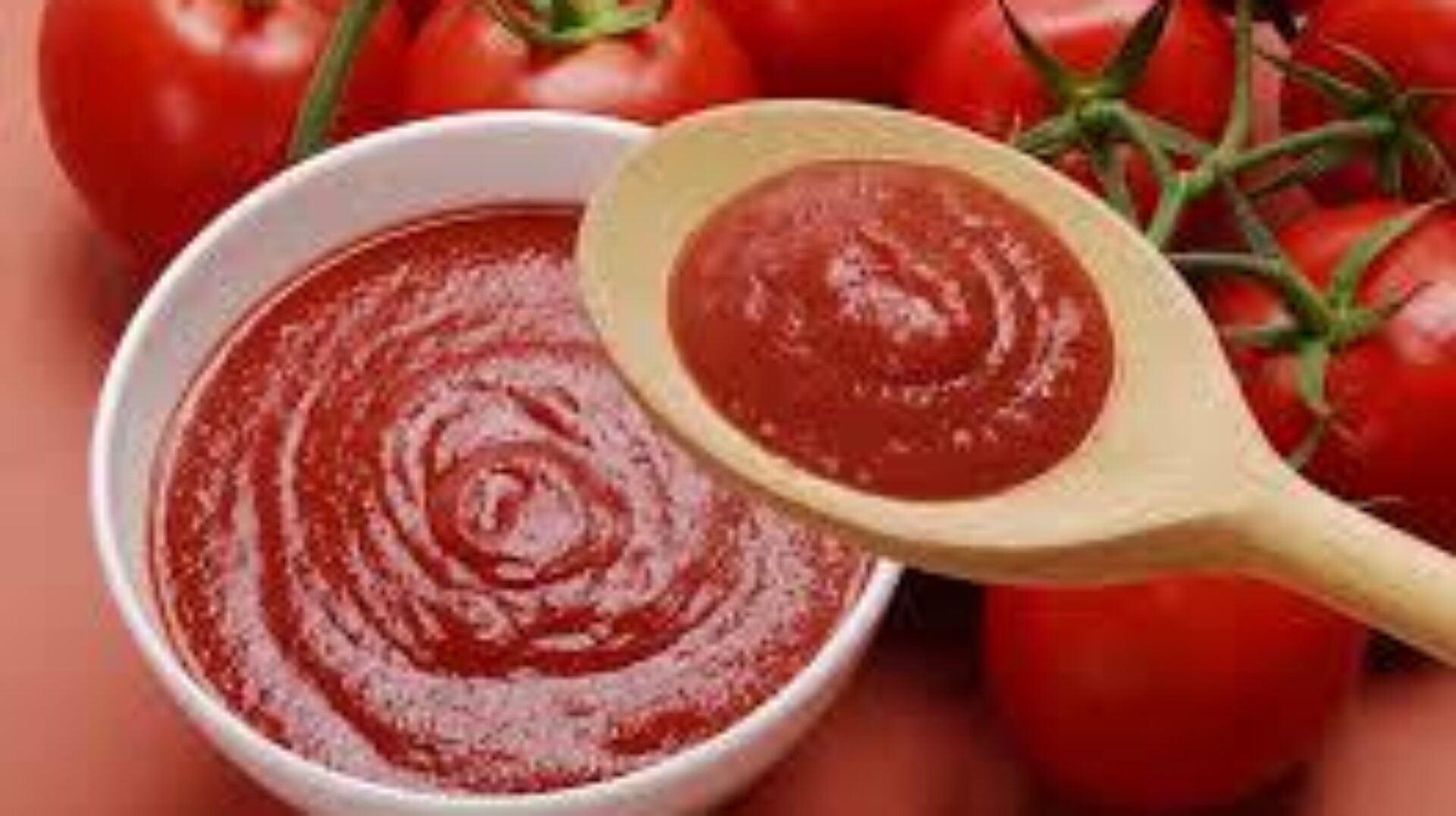
Project Overview
Product: Tomato Ketchup / Tomato Sauce
Type: Processed food product
Raw Material: Fresh ripe tomatoes (can use Grade-B fruits from farm surplus)
Production Capacity Example: 1,000 kg ketchup per day (scalable)
Target Market:
- Domestic retail & HoReCa (Hotels, Restaurants, Caterers)
- Export to Middle East, Africa, Asia, Europe (private label or bulk)
2. Market Opportunity
- India ranks among top tomato-producing countries.
- Ketchup consumption is increasing due to fast food, packaged snacks, and exports.
- B2B ketchup demand: restaurant chains, frozen snack manufacturers, exporters.
Top buyers: Retail brands, distributors, restaurants, processed food units, and private label importers.
3. Raw Materials
| Item | Source | Usage |
|---|---|---|
| Fresh ripe tomatoes | Local farmers / own farms | Main ingredient |
| Sugar | Local sugar mills | Sweetener |
| Salt | Food grade | Preservative |
| Vinegar / Acetic acid | Food-grade chemical | Preservative |
| Spices (clove, pepper, garlic, onion, etc.) | Local spice market | Flavor |
| Starch / Pectin | Food thickener | Texture |
| Bottles / Sachets | Packaging suppliers | Packing |
4. Machinery & Equipment
| Equipment | Function | Approx. Cost (INR) |
|---|---|---|
| Tomato washer | Cleaning tomatoes | ₹50,000 |
| Fruit pulper / extractor | Extract pulp | ₹1,50,000 |
| Steam jacketed kettle | Cooking pulp | ₹2,00,000 |
| Homogenizer | Mixing for consistency | ₹1,20,000 |
| Pasteurizer | Sterilization | ₹80,000 |
| Bottle filling & sealing machine | Packaging | ₹2,50,000 |
| Labeling machine | Branding | ₹70,000 |
| Miscellaneous (pump, conveyor, etc.) | — | ₹1,00,000 |
Total Machinery Cost: ₹10–12 lakh (for small scale)
5. Production Process
Step-by-Step Process Flow:
- Sorting & Washing: Select ripe, healthy tomatoes; wash thoroughly.
- Blanching: Boil or steam briefly to loosen skin.
- Pulp Extraction: Remove skin and seeds, collect smooth pulp.
- Cooking: Cook pulp with sugar, salt, spices, and vinegar in steam kettle.
- Concentration: Reduce moisture to get thick consistency.
- Homogenization: Uniform texture.
- Pasteurization: Heat to destroy microorganisms.
- Filling: Hot filling into sterilized bottles or sachets.
- Cooling & Labeling: Cool bottles, affix labels, pack in cartons.
6. Plant Layout (Basic Flow)
Raw Tomato Storage → Washing → Blanching → Pulp Extraction → Cooking →
Homogenizing → Pasteurizing → Filling → Cooling → Labeling → Dispatch
7. Manpower Requirement
| Role | No. of Persons |
|---|---|
| Production supervisor | 1 |
| Machine operators | 2 |
| Helpers | 3 |
| Quality control | 1 |
| Packaging staff | 2 |
| Admin / accounts | 1 |
Total: 8–10 employees
8. Quality Standards & Certifications
- FSSAI License
- BIS IS 3882:1995 (Tomato Ketchup & Sauce Specification)
- GST Registration
- Udyam/MSME registration
- Export Certification: APEDA / IEC / HACCP / ISO 22000 (for export)
9. Financial Overview (Approximation)
| Item | Cost (INR) |
|---|---|
| Land & Building (rented small unit) | ₹2–3 lakh/year |
| Machinery & Equipment | ₹10–12 lakh |
| Raw Material (monthly) | ₹2–3 lakh |
| Labor & utilities | ₹1–2 lakh/month |
| Packaging & marketing | ₹1–2 lakh/month |
| Working Capital | ₹5–6 lakh |
| Total Initial Investment: | ₹20–25 lakh (small scale) |
Profit Margin: 20–35% depending on efficiency & branding.
Break-even: Typically 1.5–2 years.
10. Branding & Sales Channels
- B2B Bulk: Supply ketchup in 5L, 10L, 20L jars for HoReCa.
- B2C Retail: 200g, 500g, 1kg bottles/sachets under own brand.
- Export: Private label ketchup manufacturing for importers (Middle East, Africa, Asia).
- Online: Amazon, Flipkart, BigBasket, own eCommerce site.
- Offline: Distributors, supermarkets, food processing units.
11. Sustainability / Value Addition Ideas
- Use tomato waste (skin, seeds) for pectin or compost.
- Solar drying for tomato powder or puree line integration.
- Recyclable PET bottles or biodegradable sachets.